MARKET INSIGHTS
What Does Conrad Corfu Tell Us About the Greek Hotel Market?
Panda Horizons Consulting · 9 October 2026
Conrad Corfu is opening in the south of the island but what does that tell us about where the next hotel opportunities in Greece could be?
After travelling across Greece, visiting hotels and properties, speaking with locals and looking beyond the headline numbers, this is one of the observations that stayed with me.
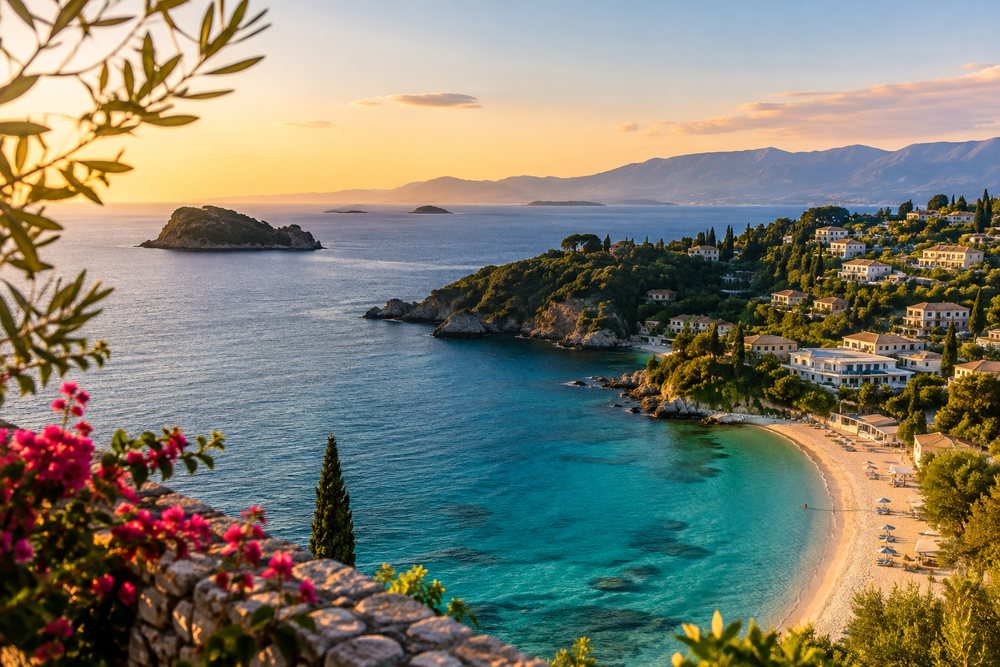
Hilton is developing Conrad Corfu in the south of Corfu, near Kavos, with 136 rooms, suites and villas and around 200 metres of beachfront, with the resort expected to open in 2027.
I obviously cannot speak for Hilton’s investment rationale. But the location is interesting because it challenges a fairly established perception of Corfu’s luxury hotel geography. Historically, much of the island’s high-end hospitality has been concentrated in the north and north-east, while the south has generally carried a very different positioning.
And yet, when you travel through the island rather than simply looking at it through the existing hotel map, the picture becomes more nuanced.
The south and south-west have some exceptional natural assets, including stretches of fine golden-sand beaches, attractive coastline and areas that remain significantly less developed from a premium hospitality perspective.
This is precisely the paradox that caught my attention.
A location does not necessarily become premium because the existing hotel market says it is premium. Sometimes the underlying destination fundamentals are already there, while the product, positioning and investment have simply not caught up yet.
Conrad Corfu is an interesting example of that distinction. It does not prove why Hilton selected the location, nor does one development automatically redefine an entire destination. But it illustrates an important principle when looking at hotel investment:
The opportunity is not always where the market is already looking.
Looking beyond the existing hotel stock
During our research across Greece, we encountered a hotel market with a very different level of opportunity beneath the surface.
A significant number of hotel assets are looking for new ownership, investment or repositioning. Many were developed 30 or 40 years ago, often under family ownership, with limited capital available for the level of investment now required to remain competitive.
Some have ageing buildings. Others have dated rooms and public areas, limited F&B concepts, weak commercial positioning or operating models that have not evolved with the market.
But this is where I believe it is important to look beyond the existing hotel classification.
A two-star hotel should not automatically be assessed as a two-star asset.
The question is not simply what the hotel is today, but why it is where it is today and what could realistically change that equation.
In some cases, the limitation may genuinely be the location or the physical asset.
In others, it may be outdated positioning, underinvestment, an operating model that has not evolved, or simply a destination whose potential has never been fully translated into the hotel product.
A hotel may therefore sit in a destination with strong natural assets, attractive demand fundamentals and access to international markets, yet still operate with a product and commercial model that reflect a very different market reality.
That creates a gap between what the asset is today and what it could become.
From location to destination
A hotel does not exist in isolation.
Its value is not determined by the location alone, but by what you create around that location and how successfully you connect it to the right customer.
Take southern Corfu.
Around Kavos, the existing perception is largely associated with a younger, more entertainment-led market. Yet the natural fundamentals of the area tell a broader story: coastline, beaches, landscape, climate and access to the island’s wider attractions.
The question, therefore, is not simply whether the location is premium today.
The more interesting question is whether a premium product and experience can be created there and whether the surrounding destination can evolve with it.
That could mean more than developing a better hotel.
It could mean creating a complete premium ecosystem around it: accommodation, beach experience, F&B, leisure, wellness, excursions, local experiences and services, all designed around a clearly defined customer.
This is where we believe we can add real value.
We do not simply assess what a destination is today. We look at what it could become for a different customer, and what needs to be created to make that proposition credible and commercially viable.
The same thinking applies to the hotel itself.
An ageing two- or three-star property in a destination that is not currently considered premium may still have the fundamentals required for repositioning. The opportunity lies in understanding what is missing, transforming the product and building the commercial proposition around a clearly defined target customer.
From existing asset to future value
This is ultimately what makes some of the opportunities we are seeing in Greece particularly interesting.
The value is not necessarily in buying a finished product. It can be in identifying an asset where the fundamentals are already there, understanding what is missing, and creating the product and positioning required to reach a different market.
That transformation can affect the customer you attract, the experience you deliver, the price you can command, the length and quality of the season, ancillary revenue and, ultimately, the financial performance and value of the asset.
In some of the cases we have analysed, the potential for repositioning appears capable of materially changing both operating performance and asset value over a five- to six-year horizon.
Of course, this is not automatic. Acquisition price, CAPEX, financing, planning, labour, seasonality, operating structure and execution all determine whether the opportunity actually works.
That is why the analysis needs to start with potential rather than simply the current P&L.
The opportunity is in the gap
This is perhaps the most interesting conclusion from our research so far.
The Greek hotel market is not simply a story about existing luxury resorts, established destinations or properties that already perform well.
There is another layer beneath that market: older assets, under-positioned destinations and properties whose current performance may say very little about their future potential.
Sometimes the fundamentals are already there, but the product has not caught up.
Sometimes the destination has the natural assets, but nobody has yet built the right proposition around them.
And sometimes the customer opportunity exists, but the hotel has never been designed or commercialised to serve that customer.
That is where value can be created.
The challenge is not simply to identify a hotel for sale. It is to understand what can be created from it, who it can serve, and whether that transformation can generate a compelling commercial and investment outcome.
This is why the Conrad Corfu example is relevant beyond Corfu itself.
The most interesting opportunity is not necessarily the hotel that already looks like a five-star hotel, in the destination everyone already considers premium.
Sometimes it is the property where the fundamentals are already there, but the product and market positioning have not yet caught up.
That is where I believe Greece deserves a much closer look.
We are currently mapping selected opportunities where this gap appears particularly interesting properties and locations where the potential may lie not in buying what already exists, but in transforming what it could become.
For investors, owners, developers and operators interested in exploring these opportunities, we would be happy to share some of our findings and selected assets in more detail.
Want to discuss this for your property?
Start a conversationKEEP READING